
BLOG POST
UV-C Is Replacing Fungicide Sprays in Commercial Grows. Here’s What the Research Shows
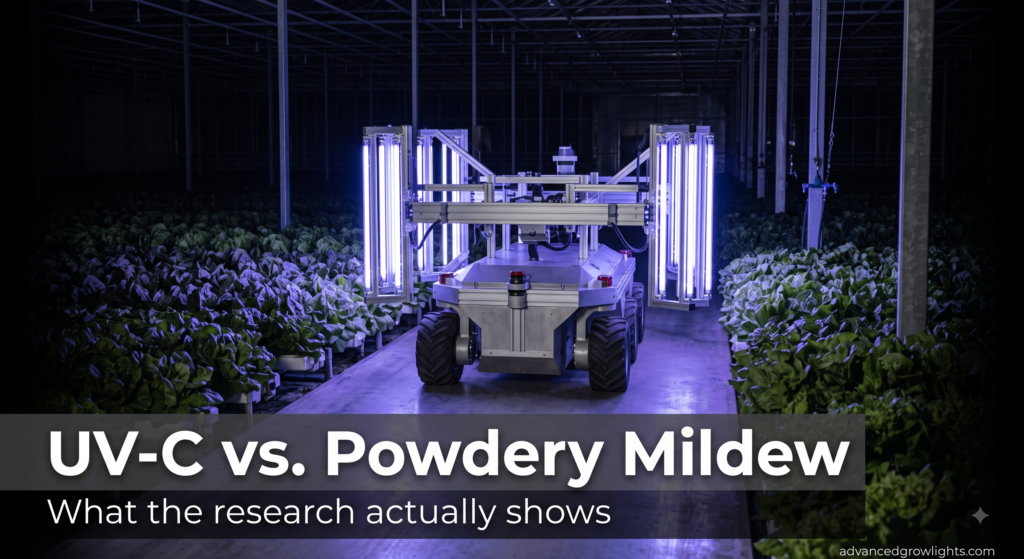
A robot that drives through a strawberry field at 2 a.m. and blasts the leaves with germicidal light sounds like a gimmick. It isn’t. TRIC Robotics has run autonomous UV-C treatments across more than 1,500 acres of commercial California strawberry fields, and the company reports a 97% reduction in spider mite egg hatch, a 30% reduction in powdery mildew pressure, and a 70% drop in pest and disease control costs for growers who adopted it. None of that is marketing copy dressed up as science. It’s backed by peer-reviewed plant pathology research that explains why hitting a plant with UV-C at night, and only at night, works so much better than doing it during the day.
Commercial cannabis and CEA operators have good reason to pay attention: fungicide resistance is a real, growing problem, and many cultivation licenses restrict which chemical treatments you can use on a crop that ends up inhaled or ingested. UV-C is chemical-free. It also isn’t magic, and the research is specific about when it works, when it doesn’t, and what it costs you in plant tissue if you overdo it.
The Problem UV-C Solves
Powdery mildew and two-spotted spider mites are two of the most persistent problems in enclosed cultivation. Fungicide rotations lose effectiveness as pathogen populations develop resistance, and many state cannabis programs restrict or ban specific active ingredients outright once flowering starts, since residue testing can fail a batch. Growers end up choosing between under-treating a crop and risking a failed pesticide-residue test at the dispensary level. UV-C sidesteps that trade-off because it’s a physical treatment, not a chemical one. There’s no residue to test for.
Why Timing Is Everything
UV-C damages fungal and pest DNA on contact. That part is well understood and has been for decades. What took longer to figure out is why applying UV-C during the day does almost nothing to an active powdery mildew infection, while the same dose applied at night can suppress it by 90% or more in controlled studies. The answer is an enzyme called photolyase, and it changes how you should think about scheduling any UV-C equipment in your facility.
The Enzyme That Undoes UV-C Damage
Research published in Frontiers in Microbiology identified a class I photolyase enzyme in tomato powdery mildew that repairs the exact DNA damage UV-C causes. The catch: that enzyme only activates when the fungus is later exposed to blue light or UV-A in the 365 to 454 nanometer range. Hit the mildew with UV-C during the day, and ambient blue light and UV-A from your grow lights or the sun switch the repair enzyme on within minutes, undoing much of the treatment before it can do its job.
Red Light Keeps the Damage From Healing
The same research found that red light exposure after UV-C treatment suppresses the photolyase gene, preventing the repair mechanism from switching on at all. In practice, that means a UV-C application timed for the dark period of your photoperiod, with no blue-heavy light source running afterward, holds up far better than a daytime pass with your full-spectrum fixtures still on. If you’re running a UV-C system on the same schedule as your grow lights, you’re working against the biology, not with it.
What the Dose-Response Research Shows
A study in Plant Health Progress on cucumber powdery mildew tested nighttime UV-C doses of about 72 to 144 J/m² and found applications every night outperformed less frequent dosing, in some conditions matching or beating the best available fungicide programs. A separate greenhouse study on organic lettuce, run through Rodale Institute, combined UV-B exposure with an OMRI-certified fungicide and cut disease severity by 90 to 99% compared with untreated plants. Studies on grape and strawberry powdery mildew, published in Plant Disease, report strong suppression too, under UV-C and UV-B regimens tuned for those specific crops.
Here’s the honest caveat: none of these studies were run on cannabis. The peer-reviewed dose-response data comes from cucumber, tomato, lettuce, strawberry, and grape systems. Cannabis-specific efficacy numbers you’ll see from equipment vendors are extrapolated from this cross-crop research, not from a published, peer-reviewed cannabis field trial. That doesn’t make UV-C ineffective on cannabis. Powdery mildew biology is similar across host plants, in broad terms. It does mean you should treat vendor claims about exact percentage reductions on cannabis as informed estimates, not confirmed data, until that research gets published.
Peer-Reviewed Suppression Rates by Crop
| Crop | Treatment | Reported Result | Source |
|---|---|---|---|
| Cucumber (greenhouse) | UV-C every night, 72-144 J/m² | Matched or beat fungicide programs | Plant Health Progress |
| Lettuce (organic greenhouse) | UV-B + OMRI fungicide | 90-99% severity reduction vs. untreated | Rodale Institute / Plant Disease |
| Strawberry (open field) | UV-C, commercial scale | 30% powdery mildew reduction; 97% spider mite egg reduction | TRIC Robotics field data |
| Grape (Western Oregon) | Germicidal UV-C | Suppressed powdery mildew and Botrytis bunch rot | Plant Disease |
| Cannabis | Not yet published | No peer-reviewed field trial available | N/A – vendor claims are extrapolated |
From Lab Bench to Commercial Field
TRIC Robotics is the clearest example of this moving from research to revenue. Their autonomous nighttime UV-C platform, combined with a bug-vacuum pass, has treated over 1,500 acres of commercial California strawberry fields. Beyond the mildew and mite numbers, growers using the system report an 18% increase in operating income, driven in large part by the 70% drop in pest and disease control spend. That’s a real commercial P&L outcome, not a lab result.
Greenhouse vegetable growers have a parallel effort underway. Advanced Intelligent Systems built an autonomous UV-C platform called Phoenix, trialed at Kwantlen Polytechnic University’s greenhouse research facility in British Columbia and in commercial cucumber and tomato greenhouses. The first version handles crops up to two meters tall, with taller-canopy versions still in development. This program has been running since 2022, which tells you two things: the technology isn’t brand new, and getting from greenhouse trial to full commercial rollout for taller, denser canopies (the kind cannabis and vertical-farm operators run) takes years, not months.
What This Means If You’re Specifying Equipment
UV-C germicidal fixtures are a different product category from your DLC-listed horticultural grow lights, and they need to be treated that way in your facility design. Two things matter most:
First, scheduling. Based on the photolyase research, a UV-C pass needs to run during a true dark period, with no blue-rich supplemental light running afterward, and isolated from daytime human traffic where possible. Second, safety. Germicidal UV-C is a photobiological hazard to skin and eyes at close range and needs the same exposure-limit thinking we cover in our IEC 62471 photobiological safety guide. Autonomous robotic platforms solve this by running only when the room is empty. A fixed UV-C fixture on a timer in a room your staff walks through needs interlocks, not just a schedule.
This is a different conversation than the one we’ve had about UV-A and far-red for growth and morphology, which you can read in our UV and far-red science versus marketing breakdown. That piece is about spectrum effects on the living plant’s growth. This one is about germicidal UV-C aimed at the pathogens and pests on the plant’s surface. Different wavelength range, different purpose, different equipment altogether.
A Worked Example: What the Cost Math Looks Like
Take a mid-size commercial cannabis operation spending $60,000 a year on fungicide and miticide applications, labor included. TRIC’s reported 70% reduction in pest and disease control costs, if it held at a similar rate for an indoor cannabis operation, would put annual spend closer to $18,000, a savings of $42,000 a year. Against that, weigh the capital cost of a UV-C system (fixed fixtures or an autonomous platform), the electrical and scheduling changes needed to run it in true darkness, and the labor cost of adjusting your protocols. For most commercial operations, that math is worth running with your own numbers rather than assuming the strawberry-field percentage carries over one to one. Crop density, canopy height, and room geometry all change how much UV-C reaches the leaf surface.
The Caveats That Matter
UV-C is not a cure. Surface treatment doesn’t eliminate an active powdery mildew outbreak for good; the research is consistent that the disease returns without continued treatment through the grow cycle. Nighttime applications, while more effective at suppressing disease, have also been shown to reduce leaf area more than daytime applications in some studies, meaning growers need to find the dose that suppresses disease without costing yield. And again: the strongest efficacy numbers come from cucumber, lettuce, strawberry, and grape research. Cannabis-specific, peer-reviewed field data doesn’t exist yet. Treat any specific percentage a vendor quotes for cannabis as an estimate borrowed from other crops until that changes.
The Bottom Line
The science behind nighttime UV-C is solid and published in credible plant pathology journals, not only vendor white papers. The commercial deployment data from strawberry fields shows real, measurable cost savings. What’s missing is a cannabis-specific field trial, so if you’re evaluating UV-C equipment for a commercial cannabis or CEA facility, ask your vendor what data they’re extrapolating from and run the scheduling and safety implications past your facility engineer before you commit budget. Browse the AGL directory for verified grow light specs as you plan how UV-C treatment fits alongside your existing horticultural lighting.
Frequently Asked Questions
Does UV-C kill powdery mildew?
UV-C damages the fungal DNA responsible for powdery mildew reproduction, suppressing the disease rather than killing existing colonies outright. Peer-reviewed studies on cucumber, lettuce, strawberry, and grape report suppression rates from about 30% to over 90%, depending on dose, frequency, and crop.
Why does UV-C need to be applied at night?
A fungal enzyme called photolyase repairs UV-C-induced DNA damage, but it only activates when later exposed to blue light or UV-A. Applying UV-C at night, away from blue-rich light sources, prevents that repair mechanism from switching on and preserves the treatment’s effect.
Is there peer-reviewed research on UV-C for cannabis?
Not yet. The published dose-response research covers cucumber, tomato, lettuce, strawberry, and grape systems. Vendor claims about UV-C efficacy on cannabis are extrapolated from this cross-crop research rather than confirmed by a published cannabis field trial.
Can UV-C treatment damage my plants?
Research shows nighttime UV-C applications can reduce leaf area more than daytime applications at higher or more frequent doses. Growers need to calibrate dose and frequency to suppress disease without a measurable yield penalty, rather than assuming more UV-C is always better.
How does UV-C compare to fungicide spraying on cost?
TRIC Robotics reports growers using its autonomous UV-C platform saw a 70% reduction in pest and disease control costs and an 18% increase in operating income, based on commercial deployment across more than 1,500 acres of California strawberry fields. Results on other crops and facility types will vary.
Is UV-C safe for workers in a grow room?
Germicidal UV-C is a photobiological hazard to skin and eyes at close exposure and requires the same exposure-limit precautions covered under IEC 62471. Most commercial systems run during unoccupied dark periods or use robotic platforms with interlocks, rather than fixed fixtures operating while staff are present.
Does UV-C replace fungicide use?
Several studies combine UV treatment with a fungicide rather than replacing it outright. The Rodale Institute lettuce study, for example, achieved its strongest results pairing UV-B exposure with an OMRI-certified fungicide, not UV alone. UV-C cuts chemical dependence; it doesn’t remove the need for a fungicide program altogether.
What pests besides powdery mildew does UV-C affect?
TRIC Robotics reports a 97% reduction in spider mite egg hatch, including documented control of Lewis mite eggs, and a 58% reduction in lygus bug cat-facing damage in commercial strawberry deployments, alongside its powdery mildew results.
Does UV-C kill powdery mildew?
UV-C damages the fungal DNA responsible for powdery mildew reproduction, suppressing the disease rather than killing existing colonies outright. Peer-reviewed studies on cucumber, lettuce, strawberry, and grape report suppression rates from about 30% to over 90%, depending on dose, frequency, and crop.
Why does UV-C need to be applied at night?
A fungal enzyme called photolyase repairs UV-C-induced DNA damage, but it only activates when later exposed to blue light or UV-A. Applying UV-C at night, away from blue-rich light sources, prevents that repair mechanism from switching on and preserves the treatment’s effect.
Is there peer-reviewed research on UV-C for cannabis?
Not yet. The published dose-response research covers cucumber, tomato, lettuce, strawberry, and grape systems. Vendor claims about UV-C efficacy on cannabis are extrapolated from this cross-crop research rather than confirmed by a published cannabis field trial.
Can UV-C treatment damage my plants?
Research shows nighttime UV-C applications can reduce leaf area more than daytime applications at higher or more frequent doses. Growers need to calibrate dose and frequency to suppress disease without a measurable yield penalty, rather than assuming more UV-C is always better.
How does UV-C compare to fungicide spraying on cost?
TRIC Robotics reports growers using its autonomous UV-C platform saw a 70% reduction in pest and disease control costs and an 18% increase in operating income, based on commercial deployment across more than 1,500 acres of California strawberry fields. Results on other crops and facility types will vary.
Is UV-C safe for workers in a grow room?
Germicidal UV-C is a photobiological hazard to skin and eyes at close exposure and requires the same exposure-limit precautions covered under IEC 62471. Most commercial systems run during unoccupied dark periods or use robotic platforms with interlocks, rather than fixed fixtures operating while staff are present.
Does UV-C replace fungicide use?
Several studies combine UV treatment with a fungicide rather than replacing it outright. The Rodale Institute lettuce study, for example, achieved its strongest results pairing UV-B exposure with an OMRI-certified fungicide, not UV alone. UV-C cuts chemical dependence; it doesn’t remove the need for a fungicide program altogether.
What pests besides powdery mildew does UV-C affect?
TRIC Robotics reports a 97% reduction in spider mite egg hatch, including documented control of Lewis mite eggs, and a 58% reduction in lygus bug cat-facing damage in commercial strawberry deployments, alongside its powdery mildew results.