
BLOG POST
Lighting as a Service: How Commercial Growers Are Financing LED Fixtures Instead of Buying Them
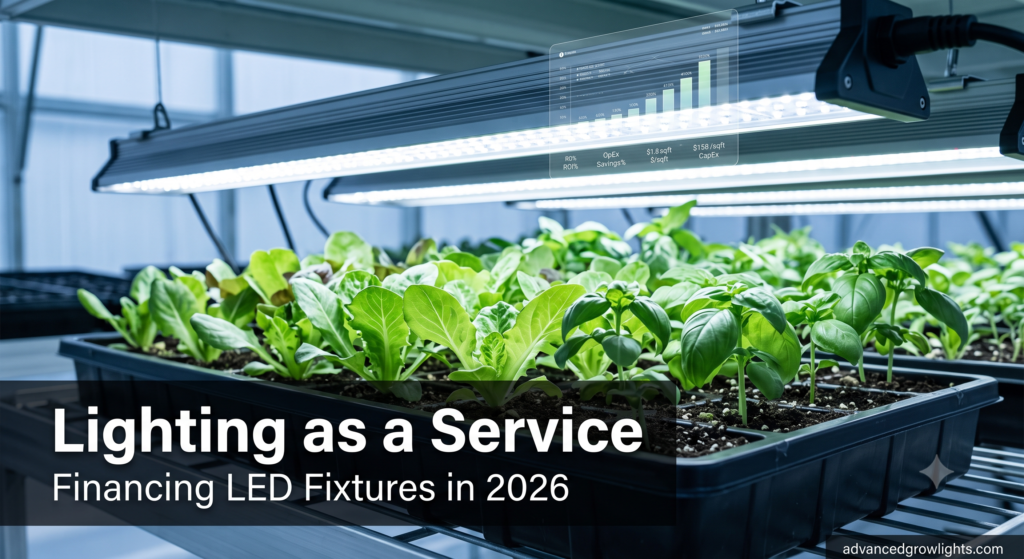
A grower buying twenty commercial LED fixtures used to face one decision: which brand. Now there’s a second decision sitting on top of it, and it has nothing to do with spectrum or PPFD. It’s whether to buy the fixtures at all.
Mordor Intelligence pegs the global grow lights market at USD 7.25 billion in 2026, growing toward USD 12.47 billion by 2030. Inside that number is a smaller, faster-growing slice: services, 14.88% of market revenue as of 2025, expanding at a projected 22.40% CAGR through 2031, well ahead of the market’s overall growth rate. That gap is lighting-as-a-service (LaaS) and vendor financing pulling share away from straight equipment sales. Fixtures are turning into a bill you pay each month instead of an asset you own outright.
Manufacturers are already building the infrastructure for it. TSRgrow runs a subscription program called Smart Power as a Service. Valoya partners with agriculture-focused lenders. Fluence runs an in-house team that coordinates utility rebates to cut the upfront cost, then routes growers to third-party agricultural lenders for whatever’s left to finance. None of this is a hypothetical trend on a slide deck. It’s live, and it changes the math on your next lighting decision.
Three Forces Driving Growers Toward Financed Lighting
Three forces are pushing growers toward financed lighting instead of owned lighting.
First, fixture prices carry real tariff exposure. Section 301 duties on Chinese-manufactured LEDs, drivers, heat sinks, and optical components stack on top of standard import tariffs, and China still supplies the majority of the components inside most horticultural fixtures sold in North America. A grower financing equipment shifts that price volatility onto a lender or vendor instead of eating it in a single capital outlay.
Second, the technology cycle keeps shortening. DLC’s Horticultural Technical Requirements moved from V3.0 to V4.0 with an 8.7% jump in the minimum efficacy threshold, now 2.5 µmol/J, and V3.0 listings began delisting in January 2026. A fixture bought outright in 2023 can fall out of rebate eligibility years before its LEDs show any real degradation. Financed and subscription models build refresh cycles into the payment structure, so the upgrade path is contractual instead of a surprise capital request.
Third, capital is tight across controlled-environment agriculture as a whole. Vertical farm operators have spent the past two years absorbing bankruptcies, distressed asset sales, and consolidation. Lenders underwriting cultivation facilities have gotten more selective, and growers have gotten more reluctant to lock six or seven figures into fixtures with a four-to-six-year depreciation schedule when the certification standard underneath them can shift in eighteen months.
The Anatomy of a Lighting-as-a-Service Deal
TSRgrow’s Smart Power as a Service program is the clearest commercial example running today. Growers subscribe to a package that bundles the LED fixtures with GROWHub monitoring software, remote diagnostics, an early-alert system for failing components, and modular power hardware built to swap out fast. The company structures payments over two to three years, and the pitch is blunt: turn lighting from a capital expense into an operating expense, and let the vendor carry the equipment risk.
Valoya takes a different path. The company doesn’t run its own lending desk. Instead it routes customers to agriculture-focused finance partners, including Contain Inc. and FundCanna, who underwrite the loan or lease while Valoya supplies the fixtures. Contain works with growers across greenhouse, warehouse, and container formats, from first-time operators to multi-generational farms. FundCanna works with cannabis cultivators and offers vendor financing, bridge loans, and cash advances alongside equipment loans.
Fluence takes a third path, and it isn’t a lender at all. The company doesn’t underwrite loans. Instead, an in-house team works utility rebate programs on the grower’s behalf, stacking that rebate against the purchase price before financing even enters the conversation. For whatever balance remains, Fluence points growers toward third-party agricultural equipment lenders rather than carrying the paper itself.
Three different structures, one shared goal. Get the fixture into the facility without forcing the grower to write one large check.
Comparing the Structures
| Structure | Who Holds the Fixture | Typical Term | Best Fit |
|---|---|---|---|
| Outright purchase (cash or loan) | Grower, from day one | N/A (owned) | Operators with strong cash reserves who want to bank full DLC rebate value and depreciation now |
| Equipment lease-to-own | Lender until final buyout | 3-5 years | Growers who want eventual ownership but need the cost spread out |
| Lighting as a Service (subscription) | Vendor, for the contract’s life | 2-3 years, renewing | Operations that want monitoring, maintenance, and refresh cycles bundled with the hardware |
| Vendor in-house financing | Varies by agreement | Set by vendor | Growers already committed to a specific brand who want one point of contact for equipment and capital |
A Worked Example: 20-Fixture Flower Room Retrofit
Take a mid-size flower room replacing 20 double-ended HPS fixtures with commercial LED bars. Assume a fixture cost of $1,200 each, a common range for commercial-grade LED bars in this class, putting the equipment total at $24,000 before installation, wiring, and controls.
- Cash purchase: $24,000 out the door, plus install. The grower owns the fixtures from day one, can claim full depreciation in the current tax year under standard equipment depreciation rules, and qualifies for any utility rebate tied to DLC-listed hardware at the time of purchase.
- 36-month subscription at about $850 a month: about $30,600 paid over the term, a real premium over the cash price. In exchange, the grower gets bundled monitoring, an early-failure alert system, and a vendor that owns the replacement risk if a driver or LED board fails outside normal wear.
- Break-even question: the premium only pays for itself if the bundled monitoring and maintenance would otherwise cost more than about $190 a month on their own, or if capital preservation during that 36-month window is worth more to the operation than the spread.
These figures are illustrative, not a quote from any specific vendor. Actual subscription pricing depends on fixture count, wattage, monitoring tier, and the financing partner’s underwriting. Run the same math against your own facility’s numbers before signing anything.
Financing Doesn’t Fix a Bad Fixture
A financed fixture is still a fixture. Spreading the cost over three years doesn’t change the underlying spectrum, efficacy, or build quality, and it doesn’t substitute for verifying specs before you sign. A grower should still confirm PPFD and DLI targets for the crop, check the fixture’s actual DLC listing status rather than trusting a sales rep’s word, and vet the manufacturer’s staying power the same way they would for a cash purchase. Financing changes who holds the capital risk. It does not change whether the light is any good.
It also raises a question a cash purchase never has to answer: what happens if the financing company or the vendor’s in-house lending arm folds mid-contract. Most subscription and lease agreements specify what happens to the hardware and the remaining payment obligation if either party exits the relationship early, but the terms vary by contract and by state commercial lending law. Read that clause before the fixtures ship, not after.
Rebates and Depreciation Get More Complicated
Utility rebate programs tied to DLC-listed horticultural lighting pay whichever entity owns the equipment at the time of installation. In a lease-to-own structure, the lender holds that title until the buyout, which can affect who’s eligible to claim the rebate and when. Depreciation works the same way. Section 179 expensing and bonus depreciation apply to equipment the business owns, not equipment it’s renting under a service contract, though the lease or subscription payments themselves may be deductible as an operating expense instead. The right treatment depends on how the specific agreement is structured and your jurisdiction’s rules. Talk to an accountant who has reviewed the contract before assuming either path saves you more.
Buying Outright Still Wins for Well-Capitalized Growers
Financing isn’t the better option in every case. A well-capitalized operator with strong cash reserves comes out ahead most of the time: buy the fixtures outright, bank the full rebate and depreciation value now, and skip the financing premium. Owning the hardware also means no exposure to a lender’s or vendor’s balance sheet. If your operation already runs its own maintenance program and doesn’t need bundled monitoring, you’re paying for a service you won’t use. The subscription model earns its premium when it replaces a real cost, staff hours spent monitoring driver health, downtime from an undetected failure, or capital that’s better deployed elsewhere in the operation right now.
FAQ
What is lighting as a service (LaaS) for grow lights?
It’s a subscription model where a grower pays a recurring fee for LED fixtures plus bundled services like monitoring, maintenance, and early-failure alerts, instead of buying the hardware outright. TSRgrow’s Smart Power as a Service program is a current commercial example.
How is grow light financing different from a standard equipment loan?
A standard equipment loan finances the purchase, and the grower owns the fixture from the start while paying down the debt. In most structures, lighting as a service keeps the vendor as the owner of the hardware for the life of the contract and bundles services on top, rather than just financing a sale.
Do leased or subscribed fixtures qualify for Section 179 depreciation?
No, in most cases. Section 179 expensing and bonus depreciation apply to equipment your business owns. Lease and subscription payments are often deductible as an operating expense instead, but the exact treatment depends on how the contract is written. Confirm with an accountant before assuming either path is better for your tax situation.
What happens to the fixtures if the financing vendor goes out of business?
It depends on the contract. Some agreements transfer the hardware and remaining obligation to a new lender or servicer; others leave the grower renegotiating terms mid-contract. Review this clause before signing, since it isn’t a question a cash purchase ever forces you to answer.
Is financing more expensive than buying a grow light outright?
In raw dollar terms, yes, over the life of the contract, in most cases. The premium pays for capital preservation, bundled monitoring and maintenance, and transferred equipment risk. Whether that premium is worth it depends on what those services would otherwise cost your operation and how much you value keeping the cash on hand.
Which manufacturers offer grow light financing today?
TSRgrow runs its own Smart Power as a Service subscription. Fluence doesn’t lend at all; its in-house team coordinates utility rebates to lower the upfront cost and refers growers to third-party agricultural lenders for the rest. Valoya partners with outside lenders, including Contain Inc. and FundCanna, rather than financing in-house. Check with the manufacturer before you sign, since financing programs change faster than fixture specs.
Does DLC rebate eligibility change if I lease instead of own the fixture?
The fixture’s DLC listing status doesn’t change based on financing structure, but who’s entitled to claim a utility rebate often does, since most programs pay the equipment’s owner at time of installation. In a lease-to-own deal, that may be the lender until buyout. Confirm rebate assignment terms with both the utility program and the financing agreement before you commit.
How long do typical grow light financing terms run?
TSRgrow structures its subscription over two to three years. Equipment lease-to-own agreements often run three to five years, closer to the useful life the industry expects from LED drivers before major maintenance is due. Terms vary by vendor and by the size of the equipment package.
Whichever structure you choose, the fixture still has to earn its keep on PPFD, DLI, and efficacy. Check our PPFD, DLI, and efficacy breakdown before you compare quotes, and see how the brands behind these financing programs stack up in our manufacturer overview. For verified specs across every listed fixture, visit the AGL directory.
What is lighting as a service (LaaS) for grow lights?
It’s a subscription model where a grower pays a recurring fee for LED fixtures plus bundled services like monitoring, maintenance, and early-failure alerts, instead of buying the hardware outright. TSRgrow’s Smart Power as a Service program is a current commercial example.
How is grow light financing different from a standard equipment loan?
A standard equipment loan finances the purchase, and the grower owns the fixture from the start while paying down the debt. In most structures, lighting as a service keeps the vendor as the owner of the hardware for the life of the contract and bundles services on top, rather than just financing a sale.
Do leased or subscribed fixtures qualify for Section 179 depreciation?
No, in most cases. Section 179 expensing and bonus depreciation apply to equipment your business owns. Lease and subscription payments are often deductible as an operating expense instead, but the exact treatment depends on how the contract is written. Confirm with an accountant before assuming either path is better for your tax situation.
What happens to the fixtures if the financing vendor goes out of business?
It depends on the contract. Some agreements transfer the hardware and remaining obligation to a new lender or servicer; others leave the grower renegotiating terms mid-contract. Review this clause before signing, since it isn’t a question a cash purchase ever forces you to answer.
Is financing more expensive than buying a grow light outright?
In raw dollar terms, yes, over the life of the contract, in most cases. The premium pays for capital preservation, bundled monitoring and maintenance, and transferred equipment risk. Whether that premium is worth it depends on what those services would otherwise cost your operation and how much you value keeping the cash on hand.
Which manufacturers offer grow light financing today?
TSRgrow runs its own Smart Power as a Service subscription. Fluence doesn’t lend at all; its in-house team coordinates utility rebates to lower the upfront cost and refers growers to third-party agricultural lenders for the rest. Valoya partners with outside lenders, including Contain Inc. and FundCanna, rather than financing in-house. Check with the manufacturer before you sign, since financing programs change faster than fixture specs.
Does DLC rebate eligibility change if I lease instead of own the fixture?
The fixture’s DLC listing status doesn’t change based on financing structure, but who’s entitled to claim a utility rebate often does, since most programs pay the equipment’s owner at time of installation. In a lease-to-own deal, that may be the lender until buyout. Confirm rebate assignment terms with both the utility program and the financing agreement before you commit.
How long do typical grow light financing terms run?
TSRgrow structures its subscription over two to three years. Equipment lease-to-own agreements often run three to five years, closer to the useful life the industry expects from LED drivers before major maintenance is due. Terms vary by vendor and by the size of the equipment package.